.png)
.png)

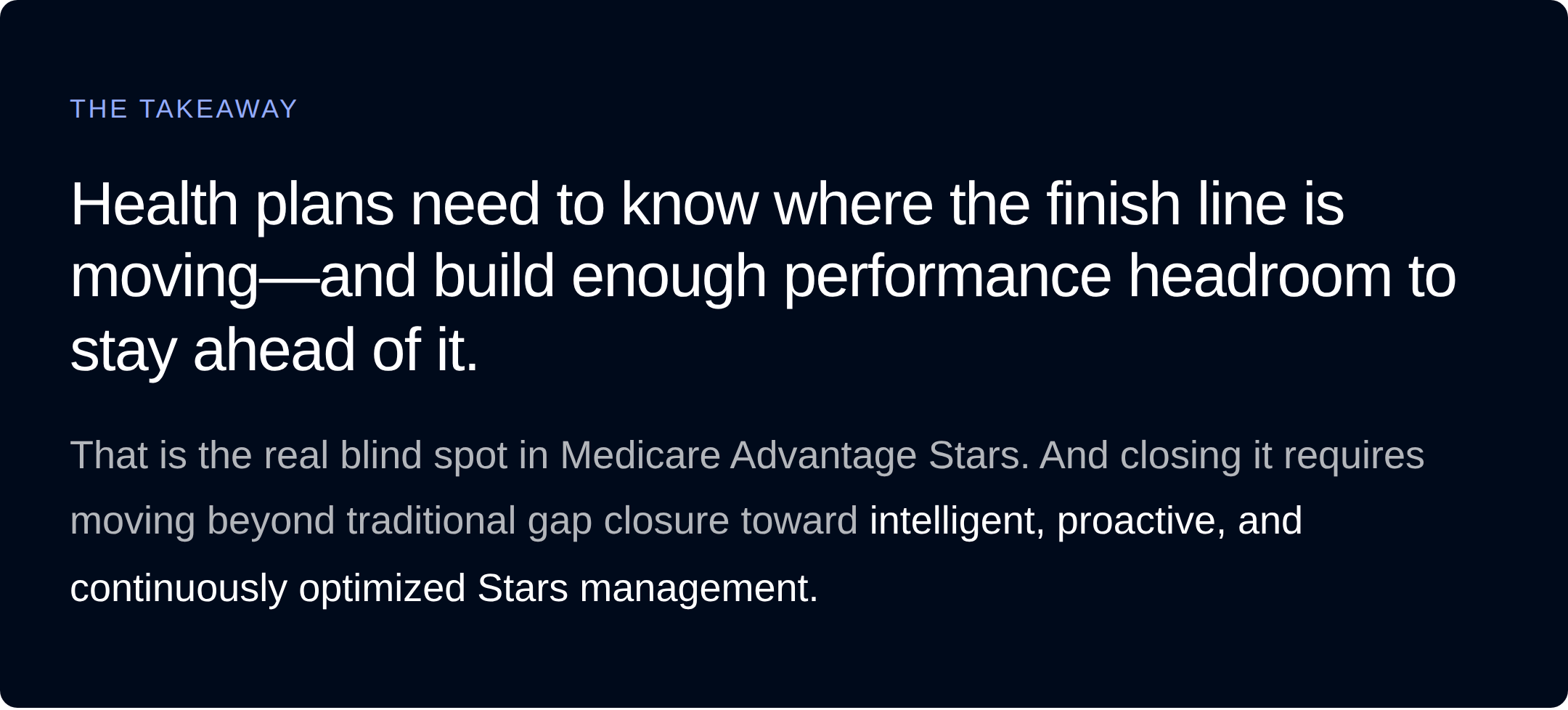
A plan can close more care gaps, improve its underlying performance, and still watch its Medicare Advantage Star Rating decline. The reason may be hiding in plain sight: cut point shifts.
For Medicare Advantage health plans, the pursuit of 4 Stars has become a yearly exercise in precision.
One of the most overlooked reasons is the movement of measure cut points.
A health plan may improve its performance year over year and still fail to cross the threshold required for a higher Star Rating. Conversely, a seemingly small change in performance can have a disproportionate impact when a plan is operating close to a cut point.
This creates a fundamental challenge:
The 4-Star Problem Is Not Just a Gap-Closure Problem
The traditional approach to Stars improvement is relatively straightforward. It follows a familiar five-step loop:

The challenge is that the Stars environment does not operate in isolation.
A plan’s performance is evaluated against measure-specific thresholds that can change over time. As performance across the Medicare Advantage market changes, the distribution of scores can shift—and so can the cut points associated with Star ratings.
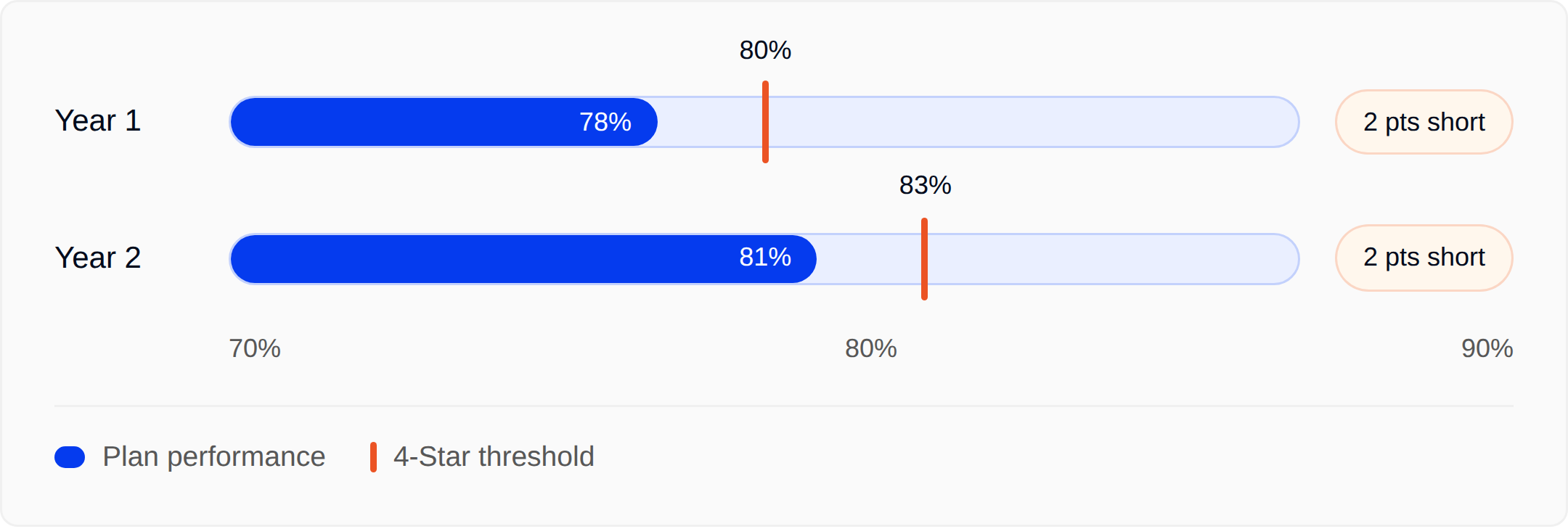
This creates a situation where a plan can make meaningful operational progress without achieving the expected Stars outcome. For example:
| Year 1 | Year 2 | Year 3 | |
|---|---|---|---|
| Plan performance | 78% | 81% | +3 pts |
| 4-Star threshold | 80% | 83% | +3 pts |
| Gap to 4 Stars | 2 pts short | 2 pts short | Unchanged |
| Result | Below 4 Stars | Still below 4 Stars | No Stars movement |
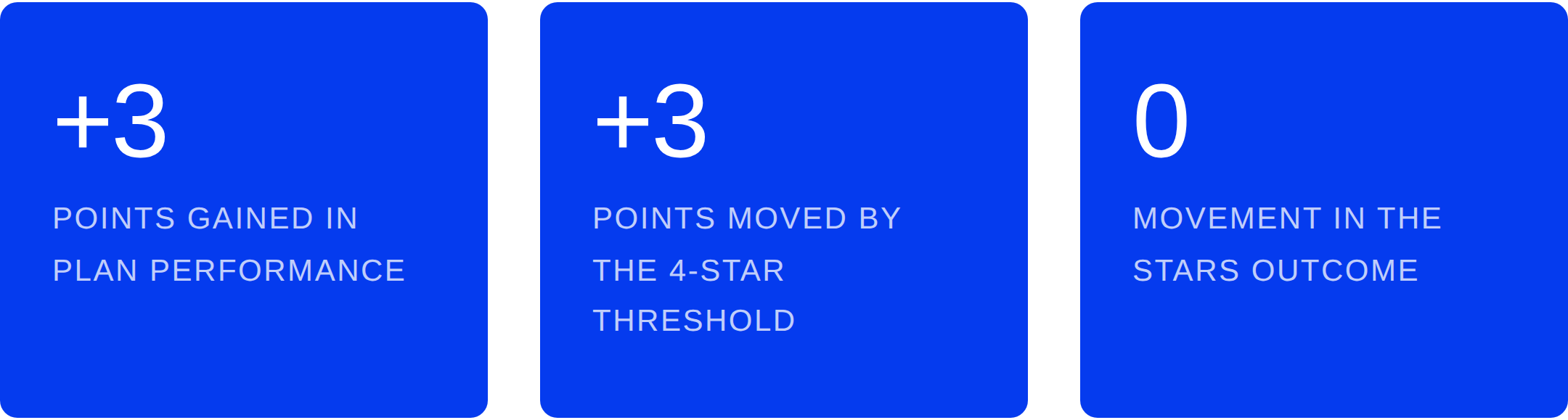
But from a Stars perspective, it didn’t move.
This is the blind spot.
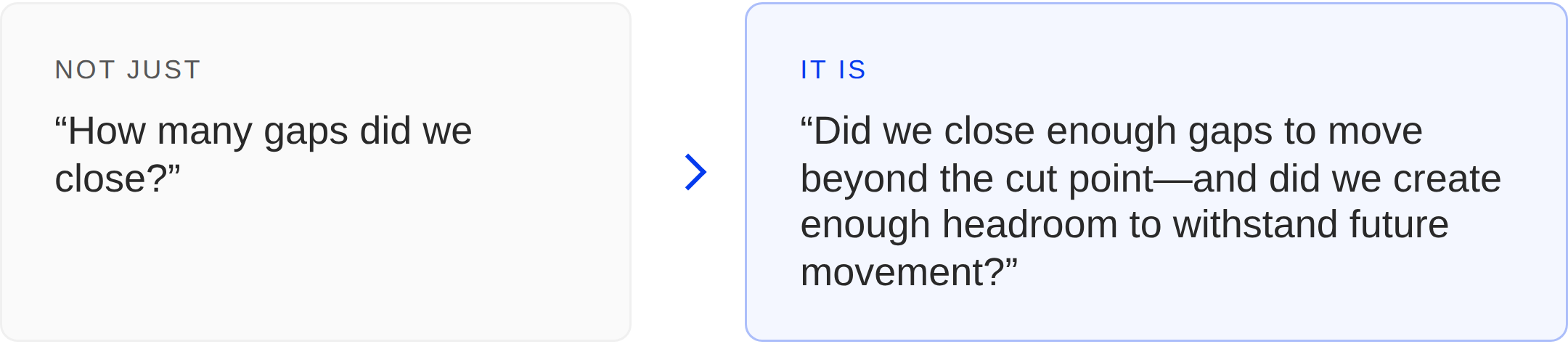
Cut Point Movement Creates a Moving Target
Medicare Advantage organizations often build Stars strategies around historical performance.
Historical performance is useful—but it can become dangerous when treated as a fixed target.
A plan might determine that it needs to reach 82% on a particular measure because that level previously corresponded to a 4-Star result. The organization then builds its intervention strategy around reaching 82%.
But if the cut point subsequently moves, 82% may no longer be sufficient.
The result is a moving-target problem.

| A static strategy | A dynamic strategy | |
|---|---|---|
| The target | “We need to reach 82%.” | “We need to understand where the measure is trending, where the relevant cut point is moving, how much headroom we need, and which interventions can create the greatest incremental improvement.” |
| Manages toward | A historical benchmark | Stars resilience |
That difference is critical. The first approach manages toward a historical benchmark. The second manages toward Stars resilience.
Why Plans Get Caught in the Cut Point Trap
There are several reasons cut point shifts can become particularly challenging.
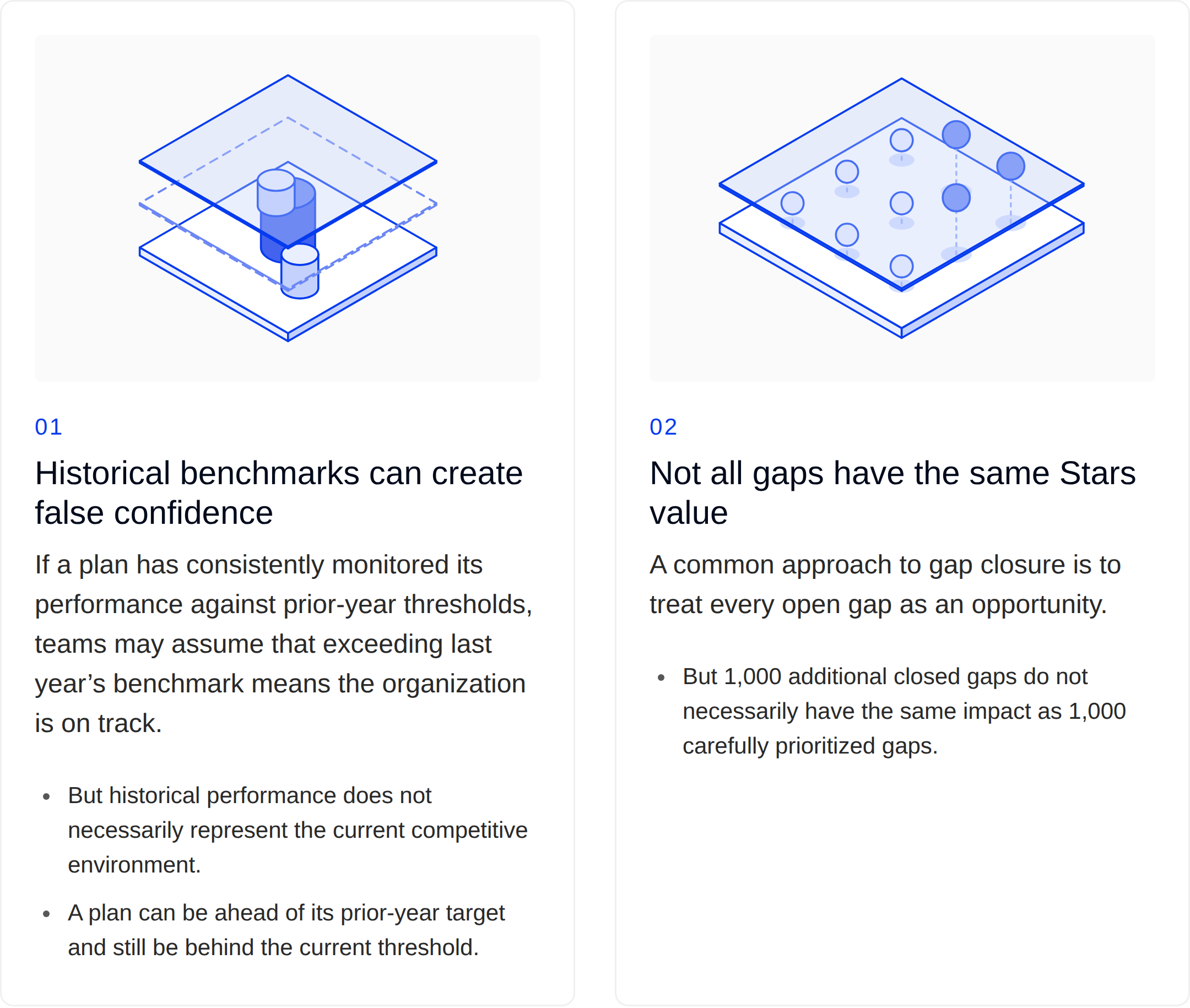
Consider two scenarios.
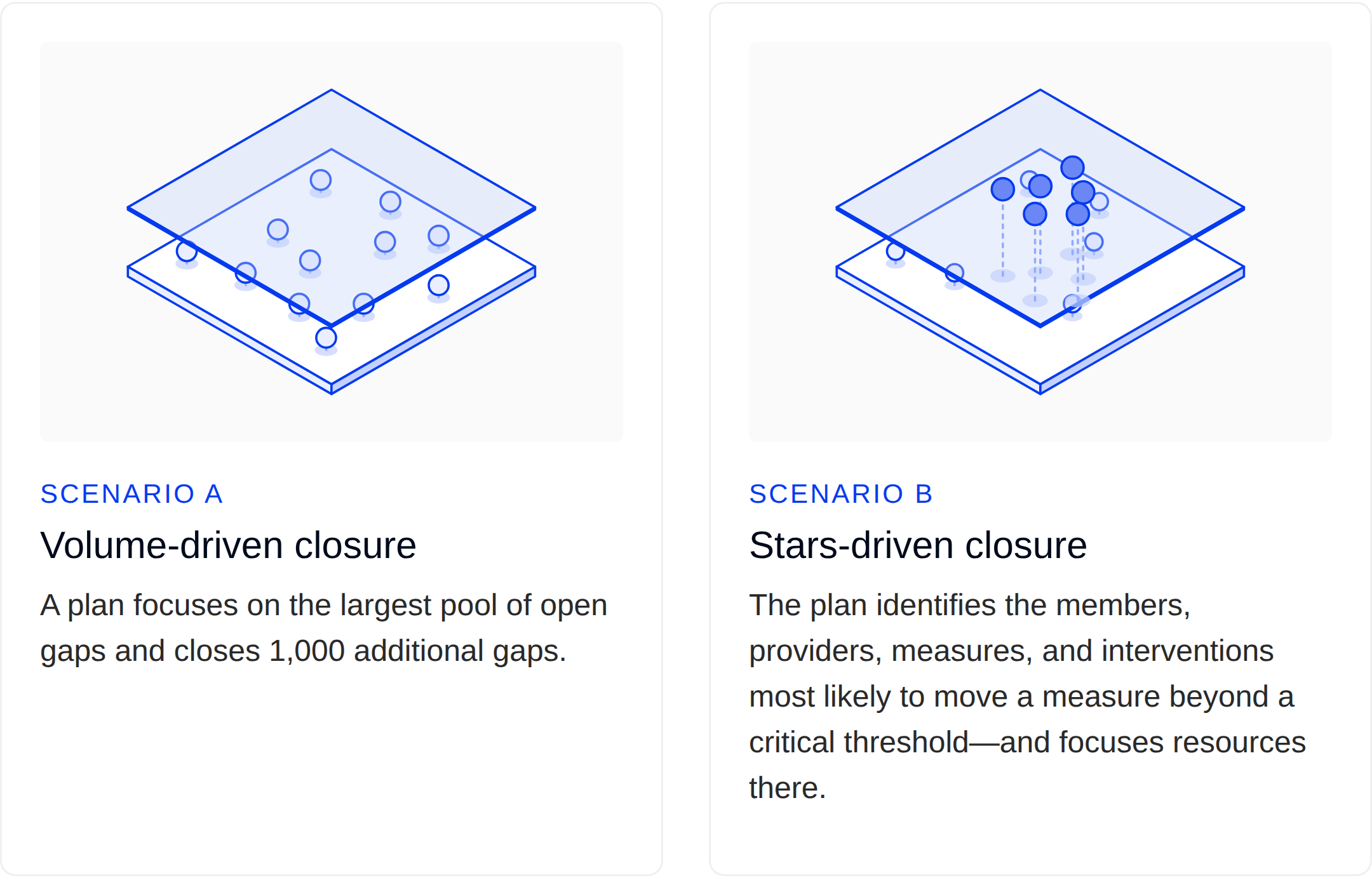
| Scenario A: Volume-driven | Scenario B: Stars-driven | |
|---|---|---|
| Where effort goes | The largest pool of open gaps | Members, providers, measures, and interventions most likely to cross the threshold |
| Additional gaps closed | 1,000 | 1,000 |
| Designed around | Closure volume | The incremental performance required to change the Stars outcome |
Both strategies close 1,000 gaps. But the second strategy is explicitly designed around the incremental performance required to change the Stars outcome.
This is where prioritization becomes essential.
The “Last Mile” Can Be More Valuable Than the First 10%
One of the most important implications of cut point movement is that the value of a gap can change depending on where a plan sits relative to the threshold.
Imagine a plan is at 79% on a measure and needs to reach 82% to cross a critical cut point.
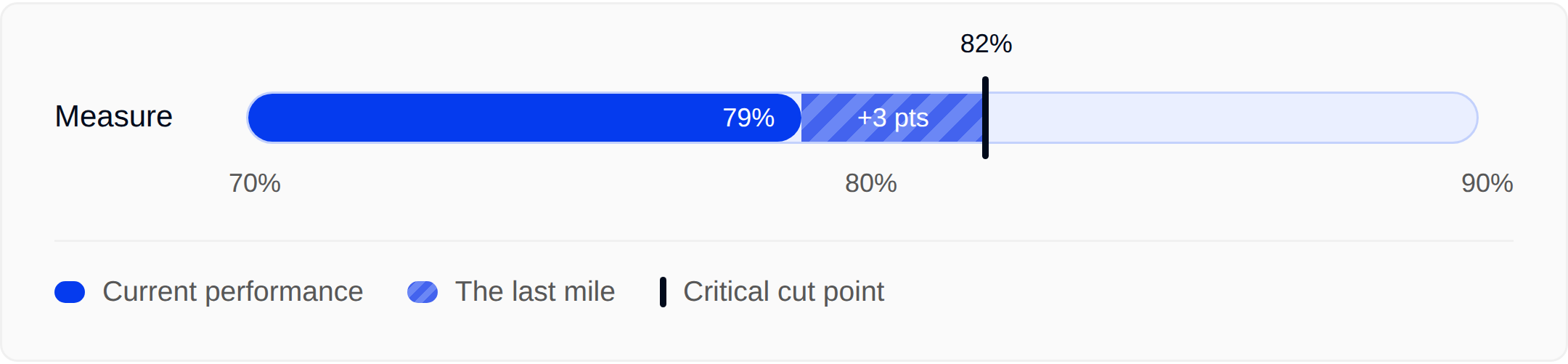
The organization doesn’t necessarily need to close every available gap. It needs to identify the highest-probability opportunities to generate the incremental three percentage points.

This distinction becomes increasingly important as plans approach the upper end of performance.
From Gap Closure to Gap Intelligence
The next evolution in Stars management is moving from gap identification to gap intelligence.
A modern Stars strategy should connect four layers of information:
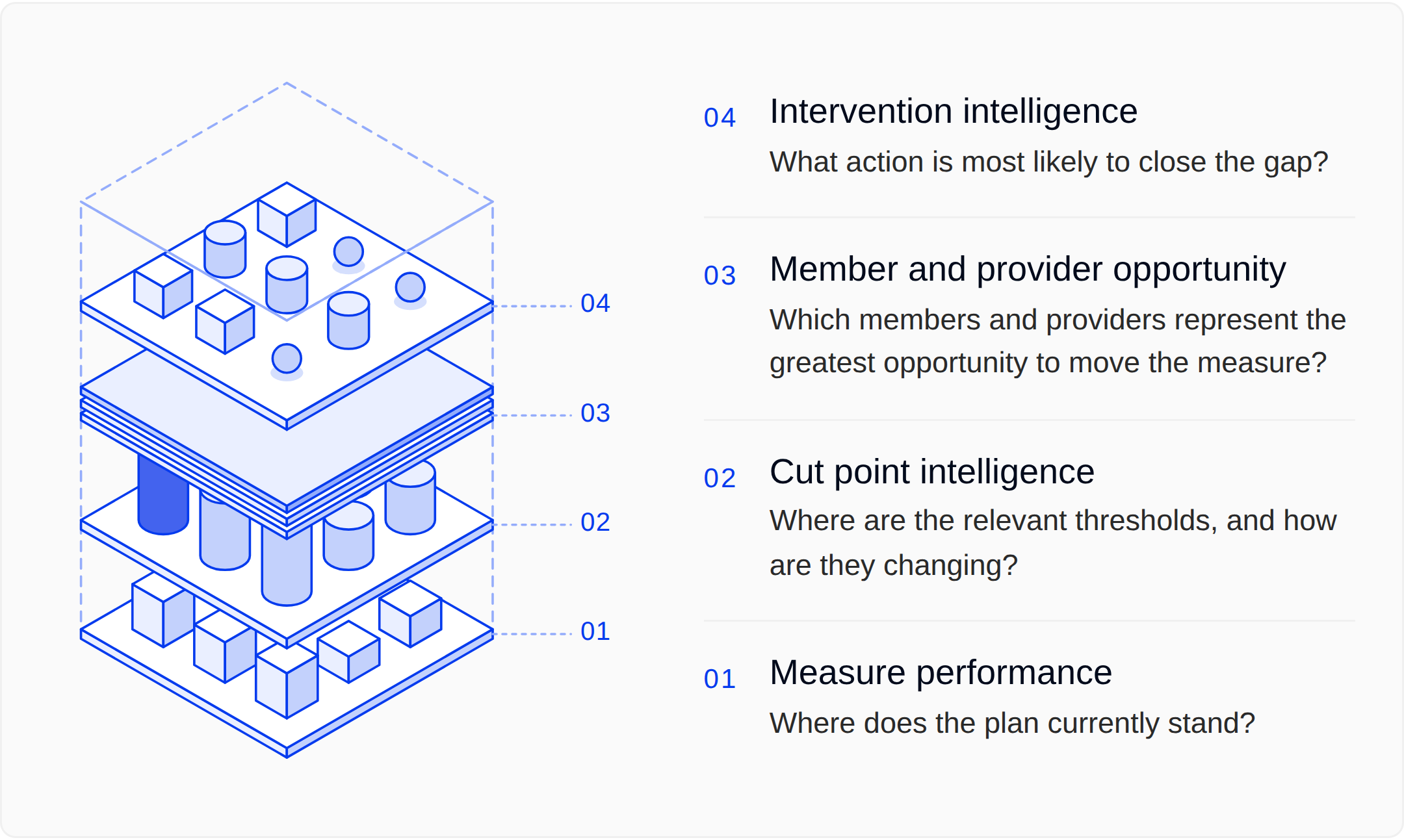
The intervention layer could include:

Why a Single-Channel Approach Falls Short
Another blind spot is assuming that every care gap should be addressed through the same intervention.
| What the gap looks like | What may work best |
|---|---|
| A member more responsive to a pharmacy intervention than a provider outreach campaign | Pharmacy intervention |
| A member more likely to complete a screening through an in-home test | In-home testing |
| A provider who needs targeted outreach supported by actionable patient-level information | Targeted provider outreach |
| An apparent gap that doesn’t represent missing care, but missing documentation or data | Chart retrieval, review, or supplemental data |
This means the most effective gap-closure strategy is increasingly multipoint.
Instead of:

The model becomes:
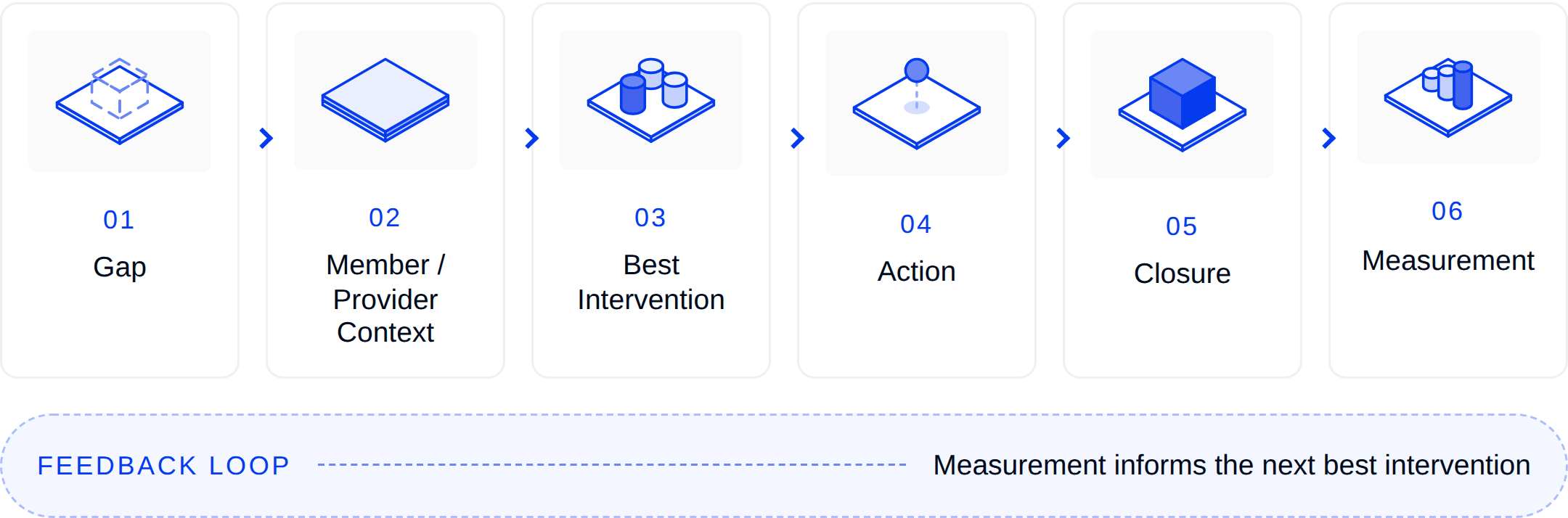
This creates a more intelligent feedback loop.
The Data Problem Behind the Stars Problem
There is another challenge hiding underneath cut point management: fragmented data.
Many health plans still have critical Stars information distributed across multiple systems:

When these sources are not unified, the plan may not have a complete view of the opportunity.
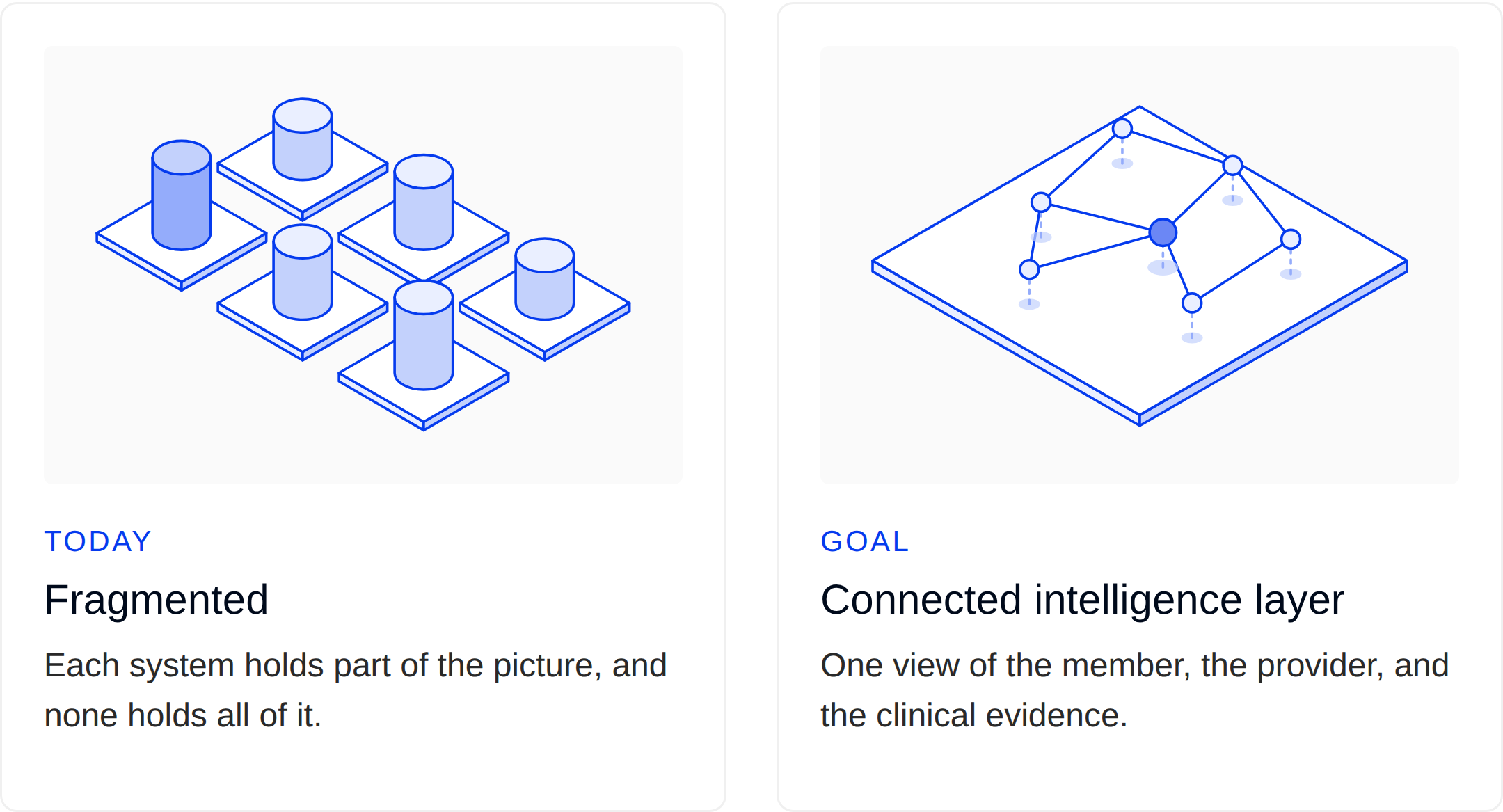
| What happens when data is fragmented | The result |
|---|---|
| A member appears to have an open gap in one system while evidence of completion exists somewhere else | Outreach to a member who has already completed care |
| A provider has a high concentration of opportunities but remains invisible because the data is not connected | The highest-leverage provider is never prioritized |
| A chart contains evidence that changes the outcome, but the organization does not retrieve it in time | A closable gap stays open |
The result is wasted effort—and, potentially, missed Stars performance.
The New Stars Operating Model: Predict, Prioritize, Act
To manage in an environment where cut points can move, health plans need to evolve from retrospective reporting to continuous Stars intelligence. A more effective operating model has three stages.
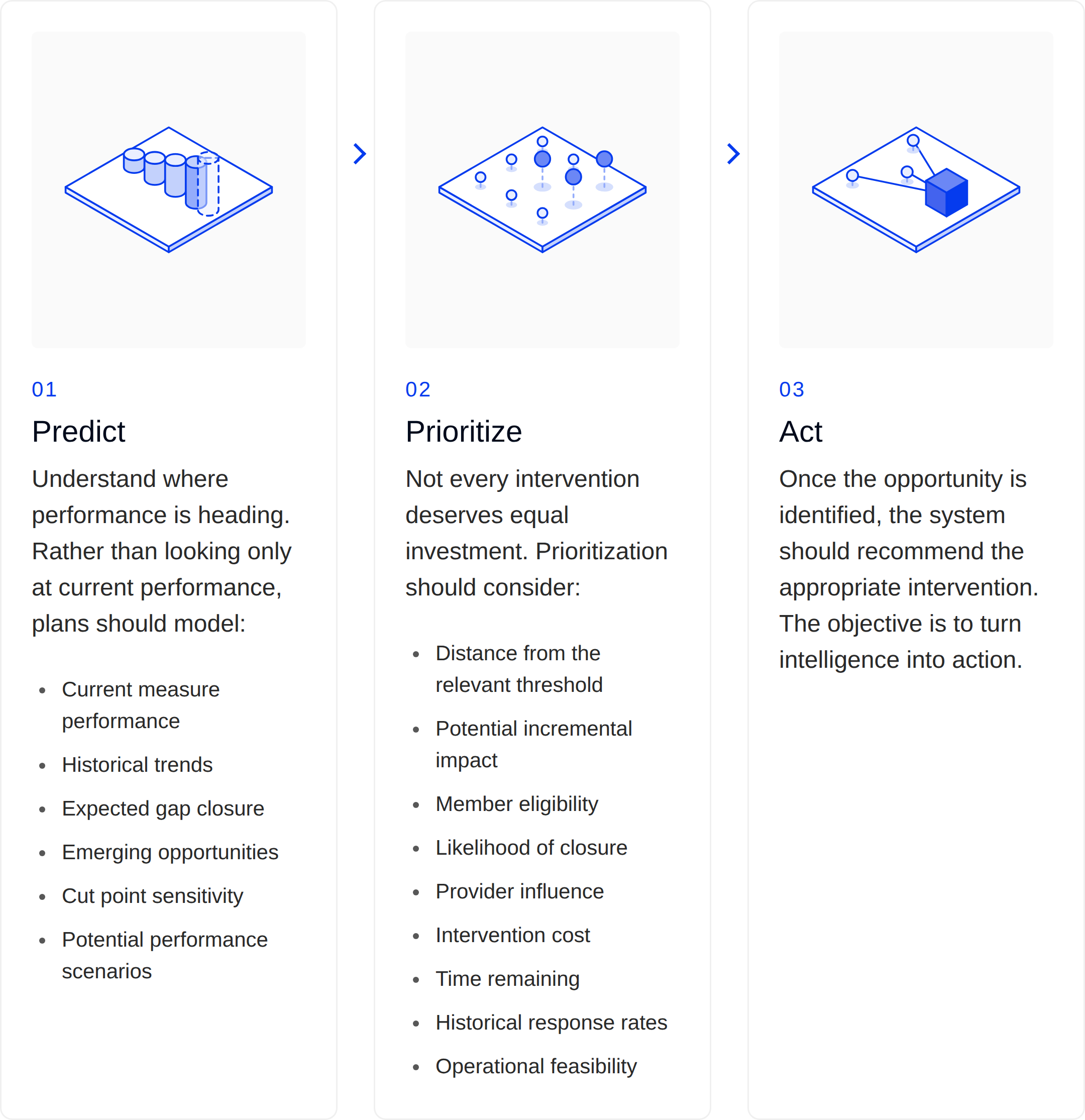
The goal of Predict is to identify measures at risk before the final performance period. Prioritize allows plans to focus limited resources where they can create the greatest measurable impact.
| Stage | Core question | Output |
|---|---|---|
| 01 Predict | Where is performance heading? | Measures at risk identified before the final performance period |
| 02 Prioritize | Where will effort create the most impact? | Limited resources focused on the greatest measurable impact |
| 03 Act | What should we do, and for whom? | The right intervention recommended for each opportunity |
Act: turning intelligence into action
For example:
| Member | Opportunity | Recommended intervention |
|---|---|---|
| Member A | Medication adherence opportunity | Pharmacy intervention |
| Member B | Screening gap | At-home testing |
| Member C | Provider documentation opportunity | Targeted provider outreach |
| Member D | Suspected risk adjustment opportunity | Chart retrieval and review |
The Goal Shouldn’t Be to Hit the Cut Point
There is an important strategic distinction here.
If a plan manages exactly to the projected cut point, it remains vulnerable. Why? Because the cut point can move. A plan sitting precisely at the threshold has little room for error.
A better strategy is to build performance headroom.
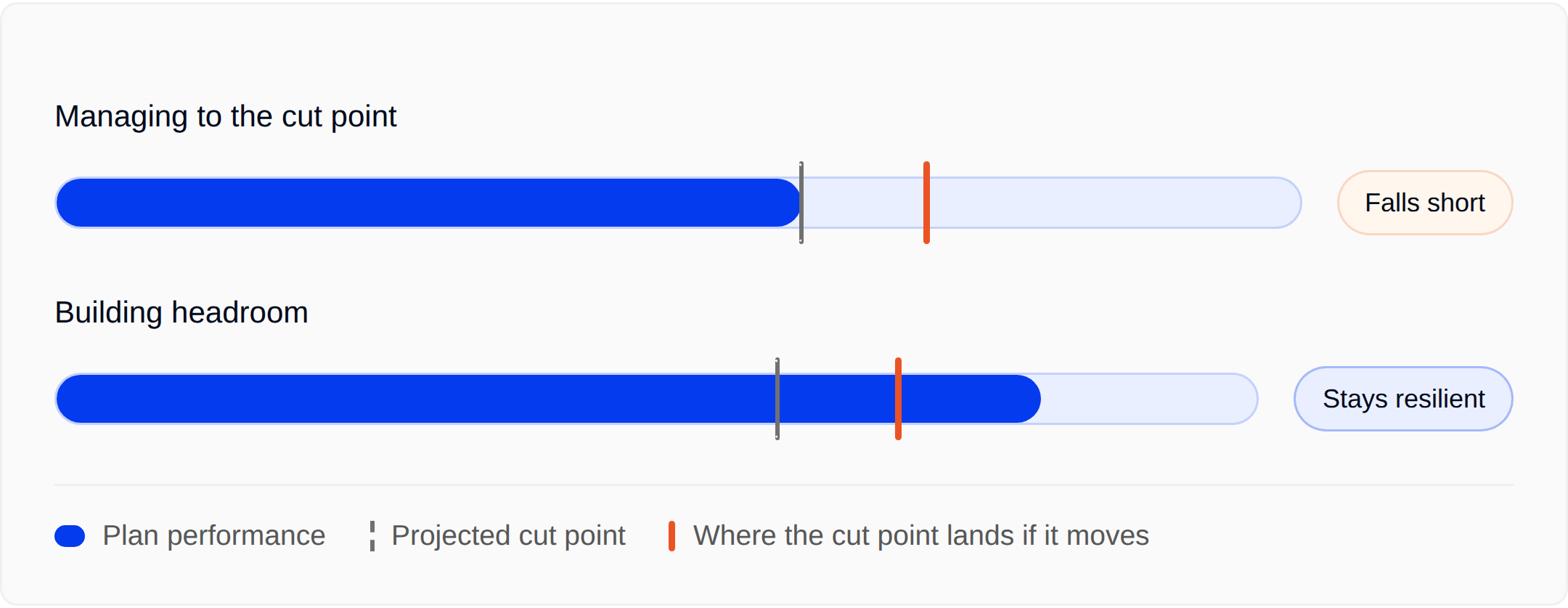

That changes how health plans allocate resources. It encourages organizations to prioritize sustainable improvements rather than last-minute gap-closing campaigns.
What Health Plans Should Be Watching Now
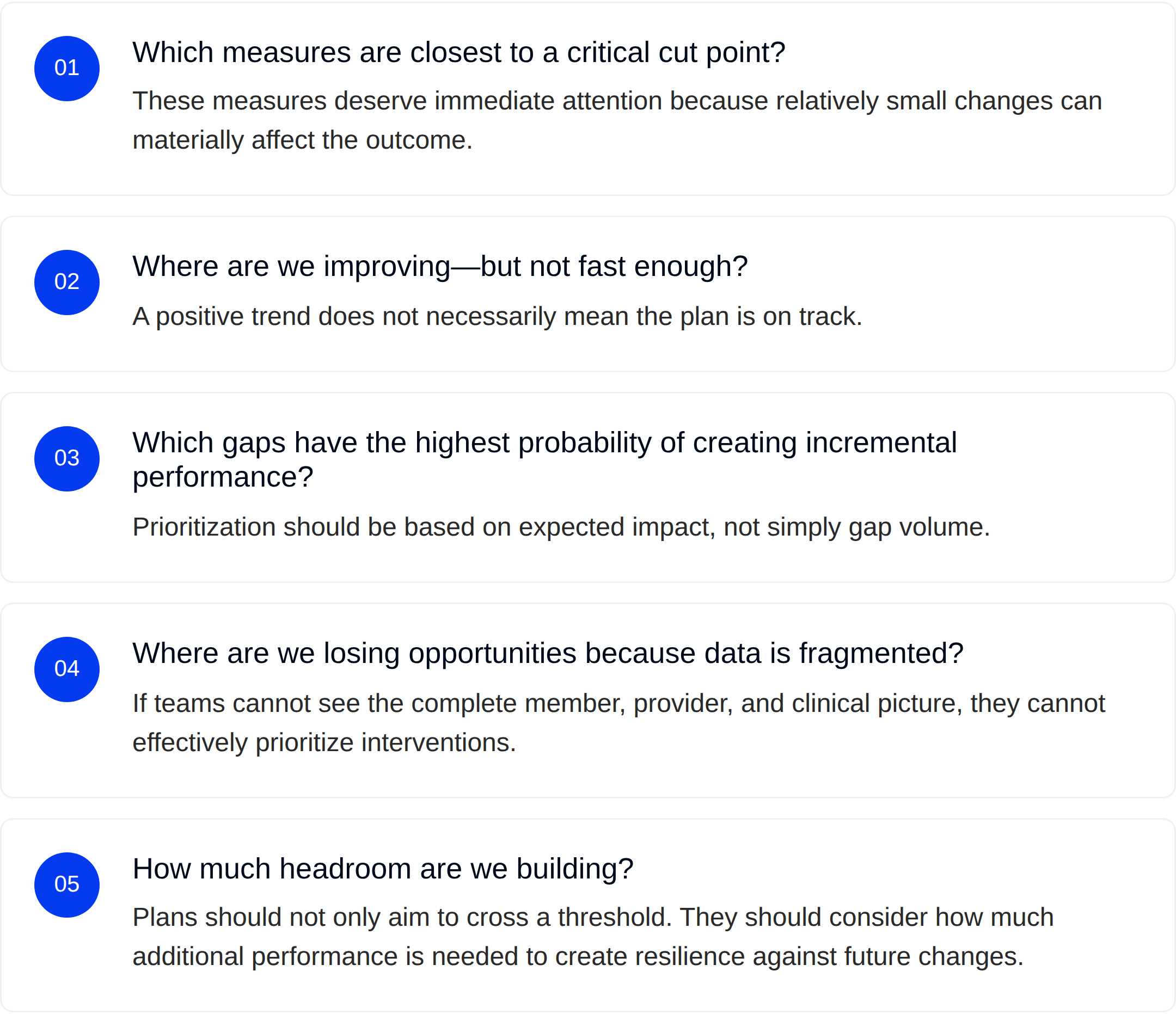
As organizations prepare for future Stars cycles, leadership teams should ask five questions:
The Future of Stars Is Dynamic
The Medicare Advantage Stars environment is becoming increasingly complex. Health plans are managing more measures, more data sources, more intervention channels, and greater operational pressure—all while trying to improve outcomes for members.
In this environment, a static gap list is no longer enough.
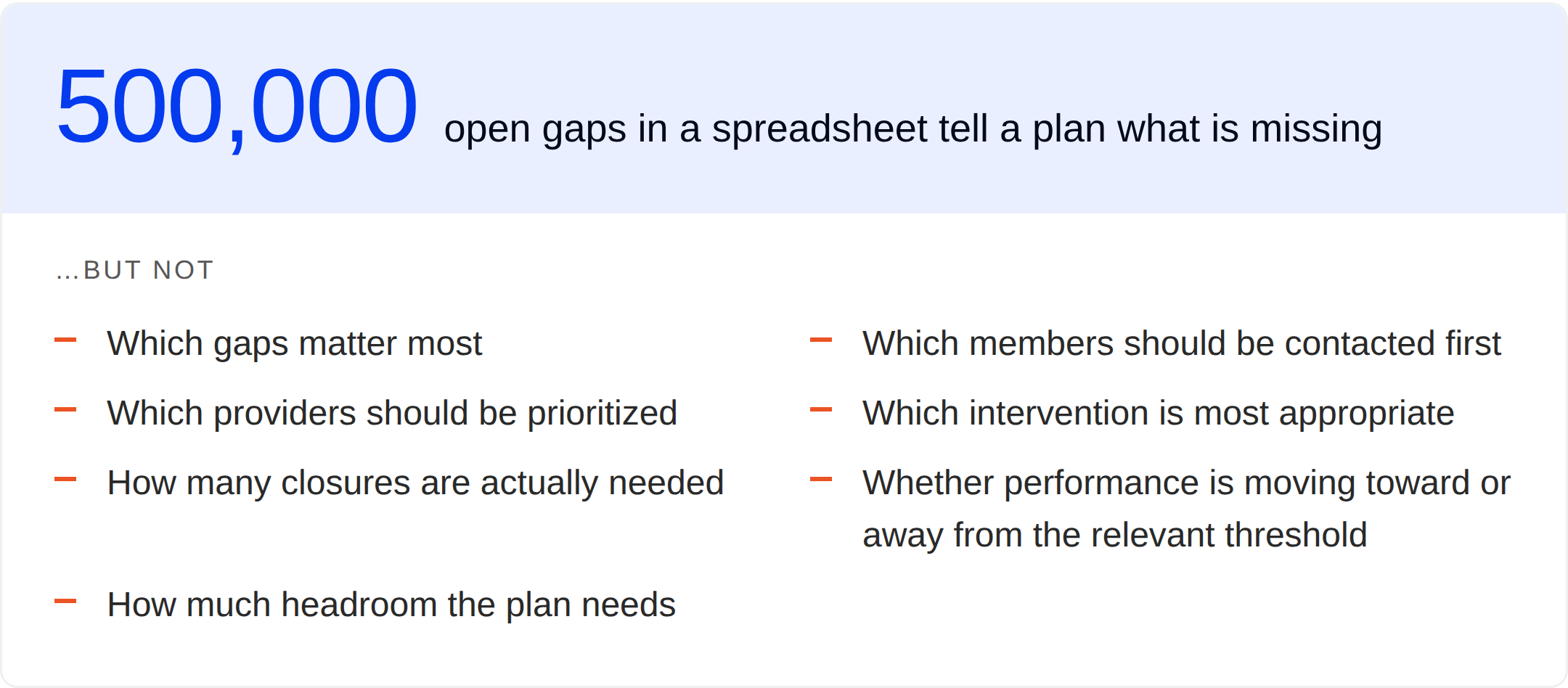
A spreadsheet showing 500,000 open gaps tells a plan what is missing. It does not necessarily tell the plan:
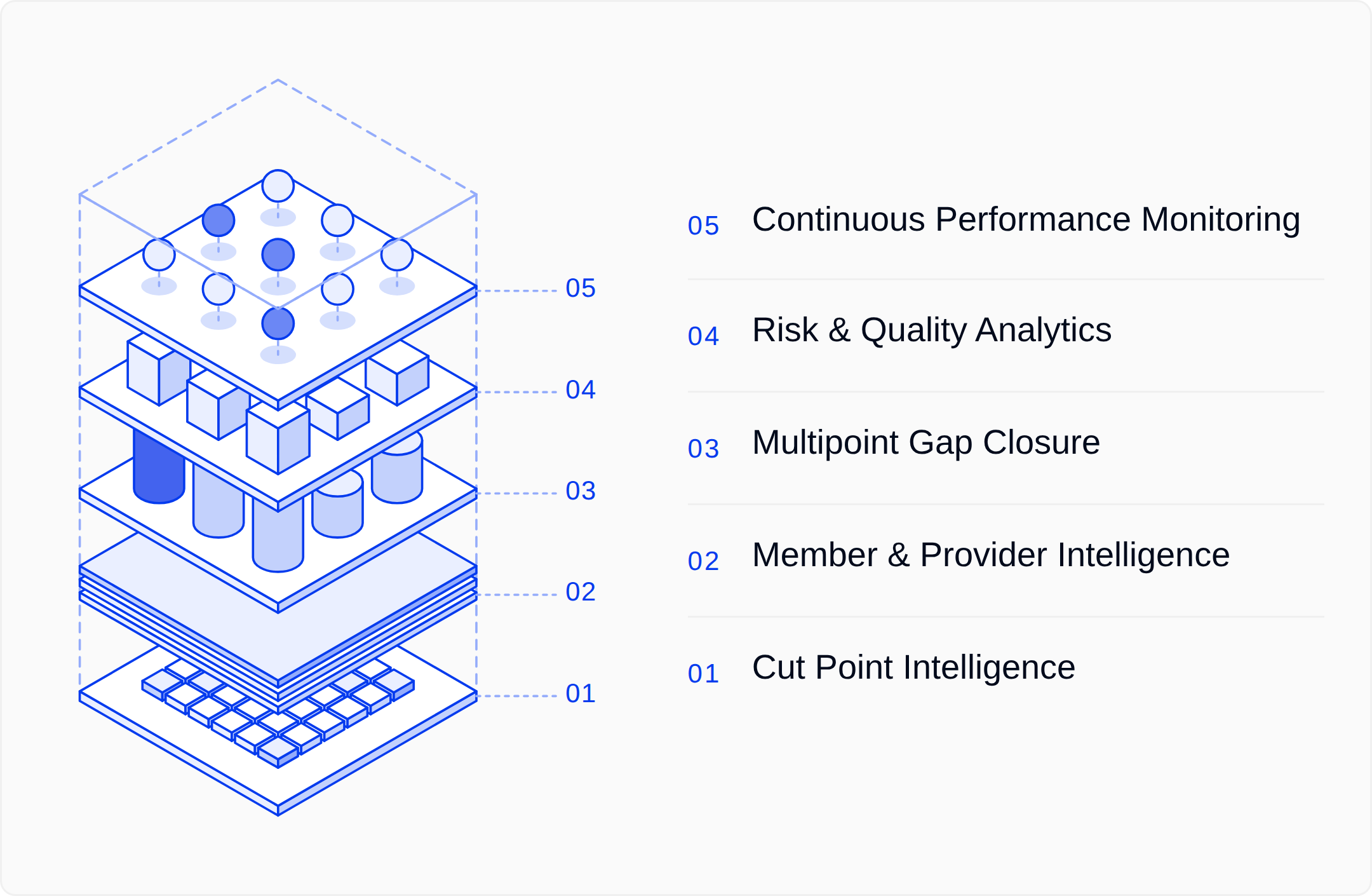
That requires a connected intelligence layer across the Stars ecosystem.
From “Close More Gaps” to “Move the Number That Matters”
The next generation of Stars performance will not be defined simply by how many gaps a health plan can identify or close. It will be defined by how intelligently the organization can translate data into measurable performance improvement.
That means combining five capabilities into a single operating model:
Because when the target moves, simply running faster isn’t enough.